We are honored by your visit!

Kehilat Beta Yisrael. Thank you!


"..And with joy, you shall draw forth water from,
the fountain of salvation!" Isaiah 12:3


Great view of Mount Sinai & burning bush!

  • KEYS PRINCIPLES:

  • 1- To spread the Love and Justice of YASHUA Ha Mashia;

  • 2- To equip the saints adequately;

  • 3- To train the saints to experience G_d manifest presence in their life acdording to Torah.


About KBY

We are young and dynamic community of believers whose uniqueness is that we’re both Jew and the nations who are bound together in the worship and praise of the One and only Creator, the G-d of Avraham, Yitzhak and Yaakov, the H-ly One of Yisrael (blessed is He) in light of the love of our Moshiach Yeshua through the traditions and customs of the Torah with central theme of “Teshuvah”. And as Isaiah Hanavi said “Also the sons of the stranger, that join themselves to the LORD,


to serve him, and to love the name of the LORD, to be his servants, every one that keepeth the sabbath from polluting it, and taketh hold of my covenant. Even them will I bring to my holy mountain, and make them joyful in my house of prayer: their burnt offerings and their sacrifices shall be accepted upon mine altar; for mine house shall be called a house of prayer for all people”.
(Is. 56:6-7)

Who we are

Linking the two sides. We’re groups of Jews and the Nations that worship in togetherness of spirit the G-d of our fore fathers, G-d of Abraham, Isaac and Yaakov, the H-ly One of Yisrael blessed be He. We believe that the H-ly One (Blessed be He) in His awesomeness has reveal His rules, regulations and guardians into the hearts of all men after the floods of Noah which is the basic laws that all men should live by, this guardians is commonly called Noahide laws.

On the other hand we see the ladder of holiness or ladder of intimate relationship through Yaakov’s dream that the H-ly One (blessed be He), He’s reveling his revelation constantly and calling everyone into a higher level of intimate relationship with Him and NOT religion but rather RELATIONSHIP. So therefore everyman if only willing possessed the ability to climb step by step up this ladder of h-liness and righteousness into an intimate, personal relationship and to become g-dlike or rather to be the mirror reflection of G-d in a closer relationship with the G-d Head.

As the H-ly One (blessed be He) called our fathers from the Nations to bring them a step higher and closer to Himself in the ladder of relationship and by choosing Yaakov over Esau making Yisrael the Light bearer and given us the 10 words to guardYisrael, a witness of the Great Light of consciousness.

So did Adonai took a tribe from the 12 tribes of Yisrael which is Levi and He draw them closer to Himself. ...

A step higher than the rest of the tribes in the ladder of intimate relationship with Him. Then the H-ly One (blessed be He) took the Kohath family from the tribe of Levi to bring them a step higher in the ladder of intimate relationship with Him.The H-ly One (blessed be He) went further by taking a Man from the sons of Amram, Moshe to bring him a further step higher in the ladder of intimate relationship with Him together with his brother Aaron to be his spokesman who later became the High priest.

The H-ly One (blessed be He) went further by taking a Man from the sons of Amram, Moshe to bring him a further step higher in the ladder of intimate relationship with Him together with his brother Aaron to be his spokesman who later became the High priest.

The uniqueness of Kehilat Beta Yisrael is bringing the nations the sons of Noah to be engraved in the tree of the commonwealth of Yisrael and a step by step higher in the ladder of personal and intimate relationship with the G-d of our forefathers Abraham, Yitzhak and Yaakov.

At Kehilat Beta Yisrael everyone has the freedom to grow up or rather climb this ladder of intimate relationship one step at a time and at your own space with the basic guardian been the 7 laws of Noah which the Creator has written in the heart of all men and if you desire and willing to grow more by taking upon yourself more responsibilities to clamp higher up the ladder of intimacy in relationship with the H-ly One then glory be to Him.

Calendar of important feasts


Kehilat Beta Yisrael Holidays 5786

Important notice!


Teaching

MUSIC / DANCE MINISTRIES / LITURGY / TORAH / BIBLE STUDY

KBY welcome everyone who has gift/love for music and dance to the worship ministries as it’s been formed currently and once formed we’ll not allow everyone to dance with the worship team during service. Please understand that the ministry of dance is a Spirit-led one which also requires practice and commitment. If you would like to dance, please speak with the Dance Worship leader about joining the team.

This Week Torah Message

Rabbi Drash

Parashat Ki Tisa 5876
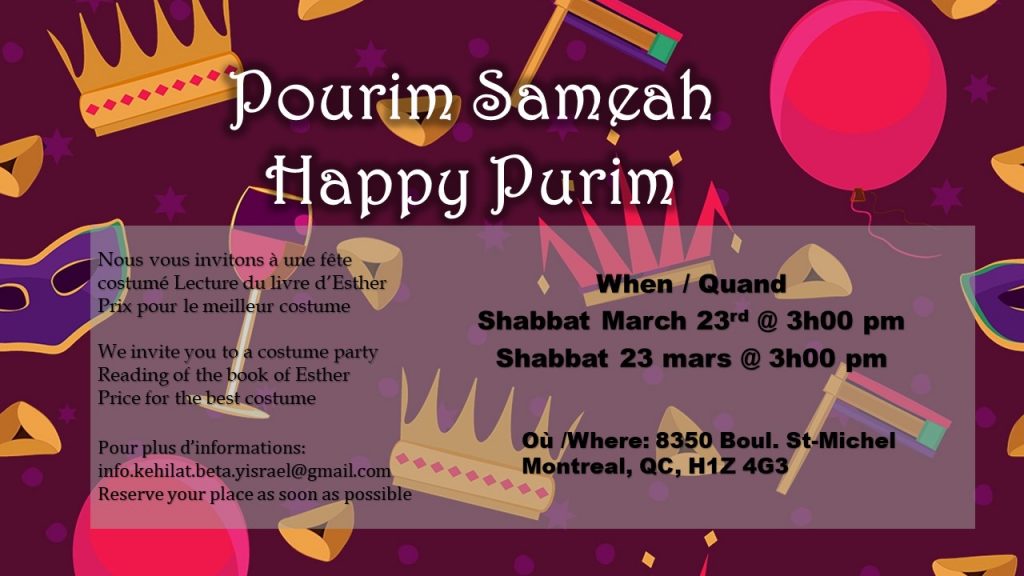
The Real Purim!!! Shabbat Parah

Adar 18, 5786 / March. 7, Sat. 2025
By Rabbi Yitzhak Avraam

Although Purim is only a minor holiday with relatively few Mitzvos and easy preparation, I would like to introduce a new concept for Purim. In no way am I suggesting that anyone go out and drink every night. This is a meaningful way to ascend to a level of our own greatest height. Purim, a holiday celebrated by encouraging the physical through observance of the particular Mitzvos of the day, is contrasted to Yom Kippur, a day we are on a spiritual high through depriving ourselves of physical pleasure. For forty days, beginning with the month of Elul through the Ten Days of Repentance, we learn and practice repentance culminating with the Kol Nidre service of Yom Kippur. Since Purim is known in Rabbinic literature as a day like Yom Kippur, we need to have a program that will lead up to the pinnacle day of Purim.

All Israel has their ups and downs, better and worse, stronger and weaker time periods in their Avodas Hashem, their service to God. I know for myself that there are times I learn better or am able to be more focused on growing as a person in my relationship to Hashem, and there are other times I find myself in a rut. It is difficult to maintain that ‘top of the ladder’ position. Typically, we come down a bit and hopefully are able to climb higher than before. It is recommended that we view our spiritual well-being in the form of a heart monitor, seeing the jagged lines going up and down. Rare is the time when the line keeps on going straight up, and it is deathly frightening to see it go straight down. Instead, it goes up and down, as does our spiritual heart monitor. At one point or another each and every one of us accepted and committed to a certain lifestyle of keeping and observing a specific number of Mitzvos and customs...

We were M’Kabel (accepted) a certain level that unfortunately today we may not be living up to. One of the major points of the Purim story which is often overlooked and rarely emphasized was the Israel’ re-commitment to the Torah. In Megillas Esther 9:27 it states: ”Keeyimoo V’Kibloo” - the Gemara derives Mah She’Kibloo Kvar. “They fulfilled and accepted” that which they had already accepted, referring to the Torah given at Har Sinai. We have all accepted upon ourselves at one point in our lives - some earlier and others later - to commit to davening, to doing chessed, to watching what we eat, to being more aware of how we act towards each other, to curbing our lashon hora, and the list goes on. I am not here to dictate what people in the community should do, but I do want each and every person to take upon himself the highest level that they were once on and re-accept that level for the next day’s culminating on the holy day of Yom Hakippurim.

Although the story of the Torah being given was a few weeks ago in Parshas Yisro, we nevertheless see this concept of taking it upon ourselves in this week’s reading as well. In Parshas Ki Tisa we read how Moshe descended from Har Sinai only to witness Israel worshipping the golden calf. Moshe, in total disgust, took the Luchos and smashed them to the floor almost sending the message that the Israel had rejected that which they accepted earlier. In Shmos 34:1 the Torah states: “Vayomer Hashem El Moshe, P’Sal L’Cha Shnei Luchos Avanim KaRishonim, V’Chasavti Al HaLuchos Es HaDevarim Asher Hayu Al HaLuchos HaRishonim Asher Shibarta”. “God said to Moshe: ‘Carve out two tablets for yourself, just like the first ones. I will write on those tablets the same words that were on the first tablets that you broke’. The Gemara Pesachim 87b states that right before Moshe threw down the Luchos, the Holy letters flew away. Now Hashem tells Moshe those exact letters will be placed upon the second Luchos.

And He gave to Moses when He had made an end of speaking with him on Mount Sinai, the two tablets of the Testimony, tablets of stone, written by the finger of God. Ex. 31:18 Tablets written on both of their sides, on the one side and the other they were written. And the tablets, they were the work of God; and the writing was the writing of God, engraved upon the tablets. Ex. 32:15-16

GOD first made a covenant with Abraham and his descendants; circumcision being the sign of the covenant. The covenant is enacted through the circumcision at eight days old of all male infants belonging to the family of Abraham. Any male who wants to join the Abrahamic family first needs to take upon himself the sign of the covenant, and any male born into the Abrahamic family who is not circumcised at eight days old and does not correct this when older, "shall be cut off from his people; he has violated My covenant" (Gen. 17:14). By its very nature the covenant between GOD and Abraham excludes all the other families of mankind. It is a covenant between GOD and Abraham's descendants whether they are Israelites, Ishmaelites or Edomites (descendants of Esau); for all three peoples are the descendants of Abraham. However, it was through Abraham's son Isaac that GOD would reconfirm His covenant and establish Isaac's son Jacob as the foundation of His people; calling him Israel. So, at Mount Sinai GOD made a covenant with a single people - Israel and all those who had attached themselves to the Children of Israel; a special covenant between GOD and Israel. But what exactly is a covenant? A covenant is a pact or contract whereby the parties involved have certain obligations towards each other. The parties are well defined within the wording of the text and the terms of the covenant are stipulated while the rewards for keeping the covenant as well as the penalties for breaking it are plainly described.

The covenant between GOD and Israel has all of the above. The parties are well defined - GOD and Israel. The terms are stipulated - He will be our God, protect us against nature and enemies, give us the land of Canaan as an inheritance forever, provide us with bounty and great sustenance, and a whole host of other goodies; our obligations are to keep His Torah, seek justice in our dealings with our fellow human beings, worship only Him, and to be loyal to Him - not much when we consider the benefits! And the punishment if we don't keep the covenant; the slow withdrawal of His blessings that he has bestowed upon us, enemies will surround us, persecution, if we still don't heed then exile from our land, and if we still don't heed then terrible persecution in the lands of our Exile until we are no longer a stiff necked people! There are usually at least two copies of a contract one copy for each of the parties involved, and so it is with the Ten Sayings; two tablets of the Testimony - not one. Most people assume because there were two tablets that the Ten Sayings must have been divided between the two tablets. However, I like to think that the two tablets were exact duplicates of each other; the Ten Sayings written in full on both tablets. Just like any contract there were two duplicate copies - one for GOD and the other for Israel - both copies kept in the Ark of the Testimony for safekeeping. And like any other contract between a superior and an inferior, the Ten Sayings commence with the declaration of who the superior party is to the contract and their credentials, "I am GOD your God; who brought you out from the land of Egypt from the house of slavery" (Ex. 20:2). The Ten Sayings are not the entire covenant, but are the underlying themes for the various categories of ordinances, judgments, commandments, and laws contained throughout the Torah, "write for yourself these words; for in accordance with these words I will cut a covenant with you and with Israel" (Ex. 34:27).

The Ksav Sofer Rabbi Avraham Binyomin Sofer writes that the Mitzvos of Mishloach Manos, the sending of food gifts to our friends and neighbors on Purim, is the acceptance of ‘brotherly love’. The people re-accepted the love that had been lost. The Israelites were accused by Haman when he approached Achashveirosh to wipe out a people who are spread out and bickering between each other. This was an indication of a lack of unity, a lack of love for one another. But what saved the people was to re-accept the love we had at Har Sinai in order to defeat Haman: Keeymoo V’Kibloo, what they originally had at Har Sinai when we camped as one. I want to use this opportunity that the Holy One has giving us to launch the Operation Purim Project this week, and I am asking every person at his or her own level, every family, to sign up and have a united communal re-acceptance at the highest intensity we’ve ever previously attained. There is no grading system, only a simple inner self-introspection of where we are in our life by donating for community in Congo. We will also work on our ‘brotherly love’ and come close to one another as we once were at better times of friendship so that we can once again experience that which we experienced in the past.

All we need to do in order to bring down GOD's blessings upon us, to bestow upon us a good and fruitful life in our own land unmolested by others - is to keep our part of the contract signed at Mount Sinai over 3,500year ago, and He will keep His. Not much to ask for!

Remember Torah is all about relationship NOT religion!!!

Shabbat Shalom!!!


Last week

Parashat Tetzaveh 5786
The two ways and the New generation

Adar 11, 5786 / Feb. 28, Sat. 2025
By Rabbi Yitzhak Avraam

With technology improving and medicine advancing, health care for all generations, including the very young and the aging positively increases as well. Over the past fifty years, average life expectancy at birth has increased globally by almost twenty years, from 46.5 years in 1950--1955 to 65.2 years in 2002. This represents a global average increase in life expectancy of four months per year across this time span. To see three generations today is somewhat common, and we are now witnessing more and more four-generation families. There are a host of challenges which must be faced regarding caring for or attending to the needs of aging parents. We feel guilty because we cannot help enough primarily because we don’t have the time, resources or physical capacity to do the job. At the same time, we struggle to allocate adequate time for our parents, we are also bombarded with the privilege and honor of raising our children while dealing with the burden of society’s challenges. This trial is common to many people in the Hebrew and non-Hebrew world.

I am not sure I have a perfect solution, but I do have a suggestion. Beginning with last week’s parsha Teruma to the end of Shemot, we read and learn about the Mishkan and all that it contained. The Mishkan is the house where Hashem can reside in this world. But it also stands as a model for every Hebrew home as well. The Hebrew home is the place to raise our children, educate them and create harmony within all generations of family. It is interesting to note that in the printed Chumashim there are little ‘signs’ of interest. For example, there is a vertical line between the second and third word of Tetzaveh. Apparently, it is there to separate something, I would suggest the first word ‘You’ which typically and traditionally refers to Moshe, can be expounded upon to reflect every head of house. The line delineates a separation between the generations of the house of Israel. This message is reinforced in the following words of Chazal.

In this week’s Parshas HaShavua TeTzaveh the Torah states in Shemot 27:20 “V’Ata TeTzaveh Es Bnai Yisrael V’Yikchu Eilecha Shemen Zayis Zach Kasis LaMaor L’Ha’alos Ner Tamid”. “You, [Moshe], must command the Israelites to bring you clear, illuminating oil, made from hand crushed olives, to keep the lamp constantly burning Rabbi Aleksander Levinson explains that the difference between oil used for the candles and oil used for the offerings is the same difference in the two approaches to serve Hashem. Some serve God because they are commanded and thereby do it, while others serve Hashem as a hart (deer) yearns or longs to oblige. In the sense of the hart or deer, a person serves Hashem through an inner desire to get close to Him. The innermost voice within tells him to do the Mitzva. On the other hand, the person who does the Mitzva strictly because he is commanded to do so is like a servant who follows the command of his master without knowing why, without understanding the purpose for doing the Mitzva. Both methods of serving God are observed, and both methods are necessary.

Taking an olive and crushing it to take the oil for lighting of the menorah was strictly a commandment. The first words of the parsha and the name of the parsha “Tetzaveh” is the command. The command represents the first drop of oil to ooze out from the crushing process. This resulted from the obligation of the Mitzva itself. The second drop of oil for the Mincha offering was not from the crushing. The Korban Mincha was brought to show gratitude and give thanks for all the goodness Hashem bestows upon us. This sacrifice and offering came from within our essence, from a deep desire to get close to and cling to God. As it states in the beginning of Vayikra, it was the ‘Nefesh’- the soul - and the person who would offer it, not because it was a command. The word Nefesh/soul is only mentioned by the Mincha Korban.

Each and every person serves Hashem within his or her own capacity, some needing a direct command, others willing to do it on their own. A similar distinction is made between Messianic and the contemporary Mussarnik (Mussar: which means "moral conduct," "instruction," or "discipline"). The strict Mussarniks who follow the laws in a more straight and narrow fashion are doing so because they are commanded. Messianic, on the other hand, represent the inner joy in performing the commandments as a mechanism to get close to Hashem.

These two paths or philosophies need to be implemented in EVERY single Isrealites, sometimes using one method and, when necessary, sometimes applying the other. With regard to the new-generations, we need to assign different methods. We educate them to the basic tenets and rules of the Torah. When it comes to the educated children, the parents need to display an inner spiritual desire to get ever closer to Hashem. Parents from all backgrounds need to teach by example and display the fire that burnt in them to get close to Hashem. The ritualistic component obviously must be done, but to educate our children it must be from within and the desire that we want to do the Mitzvos not that we must do the Mitzvos.

Our hope and prayer are to educate from both sides and bring the family together, showing and displaying a love of Torah and fulfilling the Mitzvos because we are commanded to do so and because we want to do so.

Remember Torah is all about relationship NOT religion!!!

Shabbat Shalom!!!

Code of conduct


Kehilat Beta Yisrael Synagogue (Behaviour)

  • Therefore to him that knoweth to do good and doeth it not, to him it is sin.

    JAMES 4.17

    It is the responsibility of members of Kehilat Beta Yisrael to ensure that the synagogue is an ethical stronghold in all its pursuits and dealings. Members should be guided by kedushah (holiness) in promoting the synagogue’s mission of having personal relationship with the Holy One (Blessed be He) and sustaining Judaism. Their role is that of managing the sacred, by bringing vision, wisdom and dedication to their commitment and our holy Congregation. In doing so; they are expected to adhere to the following principles:

  • Shabbat Observance

    All Kehilat Beta Yisrael Synagogue members and staff shall observe the principles teach by the Torah and those pertaining to Shabbat observance (including arrival prior to Shabbat service and all synagogue event or services, as well as refraining from the use of electronic devices during Shabbat or Yom Tov services); all males must wear Kippot during all services and meals, and Tallit/Tefillin for morning services, where appropriate. Every female most wear the head cover during the Shabbat and all holidays service. The Kehilat Beta Yisrael Synagogue member Dress Code will be observed at all times.

  • Accountability

    Uphold Torah values such as fairness, derech Eretz (respectful engagement), mutual respect, sensitivity and openness;

    Act with personal honesty and integrity;

    Preserve the dignity of the synagogue, its members and those who serve it;

    Support the daily work of the Congregation and its leadership;

    Maintain a safe, warm and welcoming environment.

  • Respect for Others

    Ensure that everyone involved in synagogue life is treated with kavod (respect);

    Enable those who are connected with synagogue life to reach their highest potential;

    Teach that all are created b’tzelem Elohim (in the image of God) and that come with a great sense of honour, responsibility and a privilege

    Remember and remind others that the goals are relationship with the Holy One (Blessed be He), unity, not uniformity nor religiosity;

    Ensure that boundaries, prerogatives and expertise are respected.

  • Communication and Confidentiality

    Refrain from breaking the Torah laws of la-shonharah (idle gossip or slanderous talk)

    Respect the privacy of others (Remember that your right stop where the right of other begin)

    Communicate openly and truthfully

    Express constructively, and address to the appropriate party any discussions of policy, positions, programs or individuals

    Ensure that disagreement relate only to principles and priorities, not personalities

    The privileges and benefits bestowed upon members are a blessing, creating the opportunity for personal growth through commitment to the Jewish community. By living a committed Torah based life, each of us can improve while contributing to tikkun-olam (repair of the world).


Activities


Come to worship with us all year round and remain blessed.

  • Spring Activities

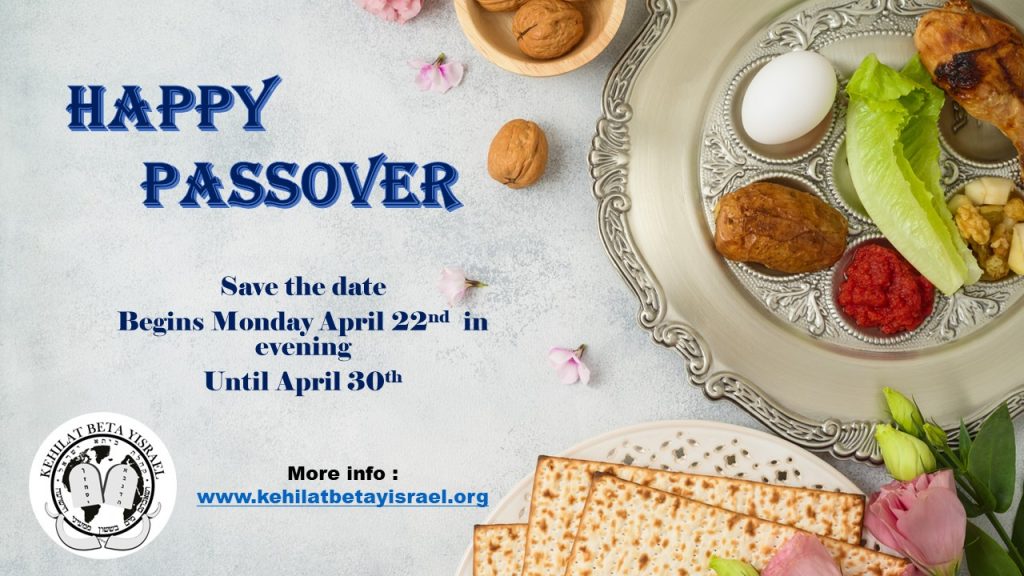
    Come and enjoy Pesach, Purim and Shavuot Festivals with us.

  • Summer activities

    Every Summer we have KBY annual BEACH summer picnic party.

  • Autumn activities

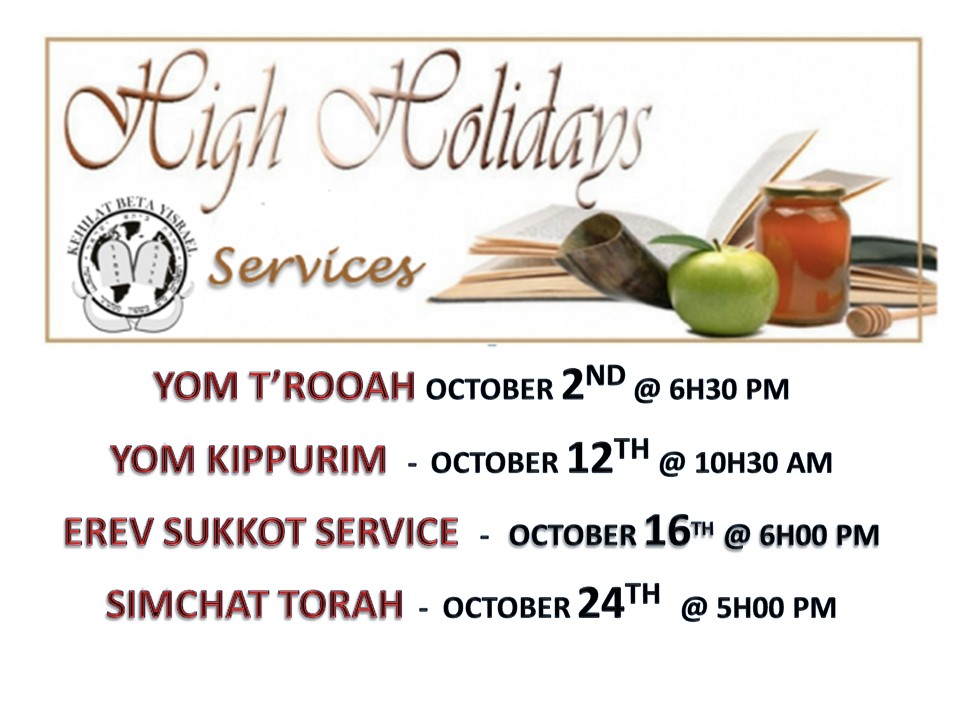
    Come let go apple picking and celebrate the High Holidays with us at KBY: Yom T'rooah, Yom Hakippurim, Sukkot and Simchat Torah

  • Winter activities

    Hanukkah celebration await you all at KBY....come let glorify our Creator and celebrate the festival of LIGHT in our Messiah who is the light of the world.

Feature
Feature
Feature

Feature

Some videos

Please watch the following, and visit our YouTube channel.

Photos archive

Previous feasts, activities...

Testimonies

Their lives were transformed by Yeshua Ha Mashiah

How may we help you?


Or wish you to contribute? Feel free to do so.

 Contact Us  Or Donate
Thank you for reaching out to us, we will reply you as soon as we can.

Three ways to contribute

Please choose one that suit you


In prayer

Your prayers matter


Kehilat Beta Yisrael synagogue ask for your continue fervent pray in our support as we follow YeshuaHaMashiach(the living Torah).

As your synagogue community we want you to feel at ease, supported, cared for and spiritually satisfied. This is our promise to everyone who engages with Kehilat Beta Yisrael for anyone of the life cycle events you choose to have with us.

Our Rabbi Yitzhak Ben Avraam is available to provide guidance whether it be for a joyous occasion or for times which involve crises.

If you know of someone who needs to speak with our Rabbi, or if you want to add a name to the Mi Sheberach list/prayer for healing, please contact us by:

514-918-5840

info.kehilat.beta.yistael@gmail.com

Materials

Things that are needed


The mission of Kehilat Beta Yisrael synagogue is to create a community where all Beta Yisrael, other Jews and the nations of all background celebrate and perpetuate the way of the Torah in their life, home and in their respective nations. Through support, tzedakah, education and observance.

We kindly ask you to supports our synagogue family spiritually, materially and socially; to enrich its members with Jewish education, encourage religious observances, Jewish home practices, attendance at services and supports and encourages youth activities and Shabbat children school.

Financially

Free will donation


Has KBY helped you in your faith in Yeshua? in this case, would you consider supporting this ministry so we dan provide more articles, do further research, produce more videos, start a radio show, and develop ministries in different cities, provinces, countries?

To all our donors and to everyone that’s been touch in one way or the other through our prayers and mission we at KBY want to say thank you so much for your financial support and time given to our Synagogue.

KBY does not take your synagogue payment as a monthly bill or a monthly dues because they’re nothing that is “DUE” but rather as an investment into the present and future of a common cause in which we all as a member believe.

We truly know that you’re giving a big chunk of your discretionary income for this common cause and believe so therefore we really appreciate your contributions/freewill donation and with a sense of gratitude KBY is very thankful.


Thank you for supporting our ministry


Use Paypal button

or scan the QR code and image

Share URL of Paypal

Scan image below: